What should an operator check first when a wet screen blinds?
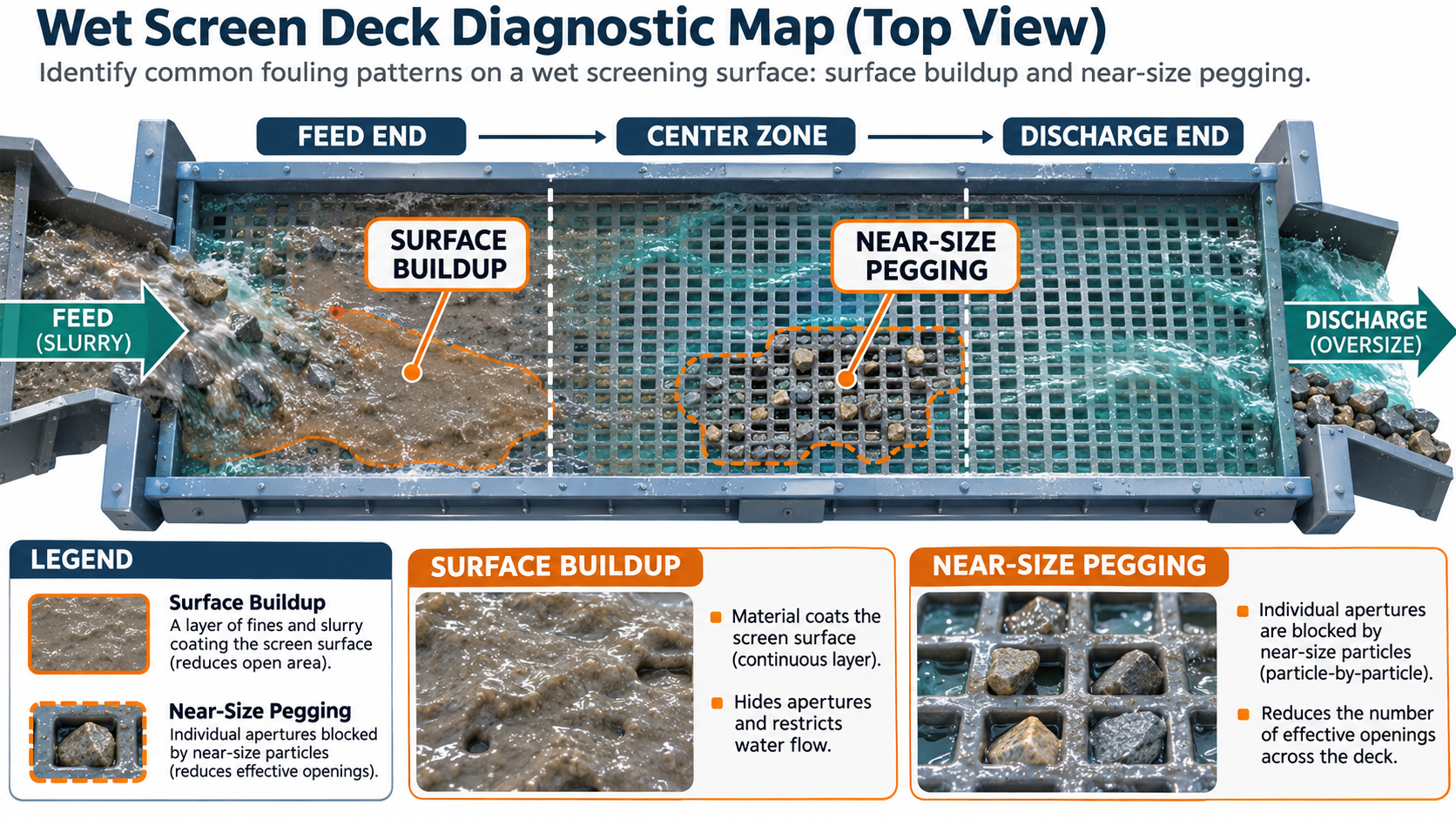
Identify where the openings are blocked, when the blockage starts, and what changed in the feed or operation. Then check moisture and solids condition, fine or clay-rich material, feed distribution, aperture geometry, media condition and deck supports. This sequence helps distinguish surface buildup from near-size particles lodged in apertures and from a process or installation issue.
This guide is for process engineers and maintenance teams diagnosing wet screening, classification or desliming performance. The checks are diagnostic prompts; the correct adjustment depends on the screen design, feed and plant procedure.
Is the problem blinding, pegging or another restriction?
Blinding generally describes fines or sticky material adhering to the screen surface and covering openings. Pegging describes particles lodging in apertures, often when their size is close to the opening. Both reduce effective open area, but they point to different checks. A loss of throughput can also come from uneven feed, damaged panels, worn supports, incorrect tension or an upstream change.
Inspect several locations across the deck and record a consistent pattern: feed end, middle, discharge end, left/right side, and individual panel zones. Photograph the material and the openings before cleaning. Note whether blockage is a surface coating, discrete trapped particles, or a damaged or distorted aperture.
Metso's screening guidance distinguishes pegging by trapped particles from blinding by moisture-related buildup, and notes that feed properties and aperture design affect each issue. Treat this as general industry guidance, not proof of the cause in a specific plant. Metso guide to pegging and blinding.
Which feed and operating changes can trigger blockage?
Compare current conditions with a period when the screen operated acceptably. Review moisture, clay or fine fraction, particle-size distribution, slurry consistency, feed rate, wash water where used, and any change in upstream crushing, washing or classification. Fine sticky material can behave differently as moisture changes; a single moisture reading may not describe the full feed condition.
Check whether the feed is spread across the deck. A concentrated stream can overload one zone and create localized buildup or faster wear. Confirm that sprays, feed chutes and distribution devices are working as intended. Record operating changes with date and shift so the pattern can be compared to maintenance observations.
Avoid assuming that adding water or changing a screen setting is safe or effective. Any adjustment should follow site procedures and be evaluated against downstream water balance, product quality, safety and equipment limits.
How should media, apertures and the deck be reviewed?
Compare the installed media with its controlled drawing and inspect the panel surface, aperture shape, fixing, sealing and wear. Check whether blockage follows a particular opening design, panel type or deck zone. Review whether openings align with supports or cross-members and whether support profiles are worn or damaged.
Flexible or self-cleaning media may be considered where the actual failure mechanism and machine compatibility support that choice. But changing to softer or thinner media may alter wear, support or load behavior. Do not select a material solely because the feed is wet. The screen-media measurement guide and installation and sealing review provide the records needed to evaluate physical fit and deck condition.
Use a small, defined trial if a design change is proposed. State the affected zone, current baseline, observation period, blockage measure, product-size checks and acceptance decision-maker. Keep feed and operating conditions in the record; otherwise, the comparison may not explain the result.
What should the maintenance record include?
Record the date, deck and zone, media identity and revision, feed description, visible blockage type, distribution pattern, cleaning action, operating condition and follow-up observation. Add photographs taken from the same points where practical. Include any changes to feed, wash water or machine settings.
The resulting evidence can support a discussion with the screen or media supplier. Send the part code, panel drawing, aperture details, machine interface, feed description and photos. A product recommendation should state its assumptions and should not promise a universal reduction in blinding.
Frequently asked questions
Does wet feed always cause screen blinding?
No. Blinding depends on how the material behaves under the actual moisture, fines, clay, aperture and media conditions. Identify the buildup pattern and compare it with feed and operating changes before changing the screen media.
Is pegging the same as blinding?
No. Pegging usually involves particles caught in openings; blinding usually involves fines or sticky material covering openings or the surface. Both can reduce open area, but inspection should identify which pattern is present.
Should we change to a larger aperture to stop blockage?
Not without checking the separation objective. A larger aperture can affect product size and recovery. Record the target cut, feed distribution and blocked-particle sizes, then review options with process and equipment specialists.
Can a flexible panel eliminate wet screen blinding?
No media should be assumed to eliminate blockage in every duty. Flexibility and aperture design may be relevant, but fit, support, load, material and operating conditions must also be reviewed.
What should be sent for a technical review?
Provide the screen and panel identification, drawing revision, aperture details, photos of blocked zones, feed and slurry description, recent operating changes and the process objective. This makes the cause review more specific.
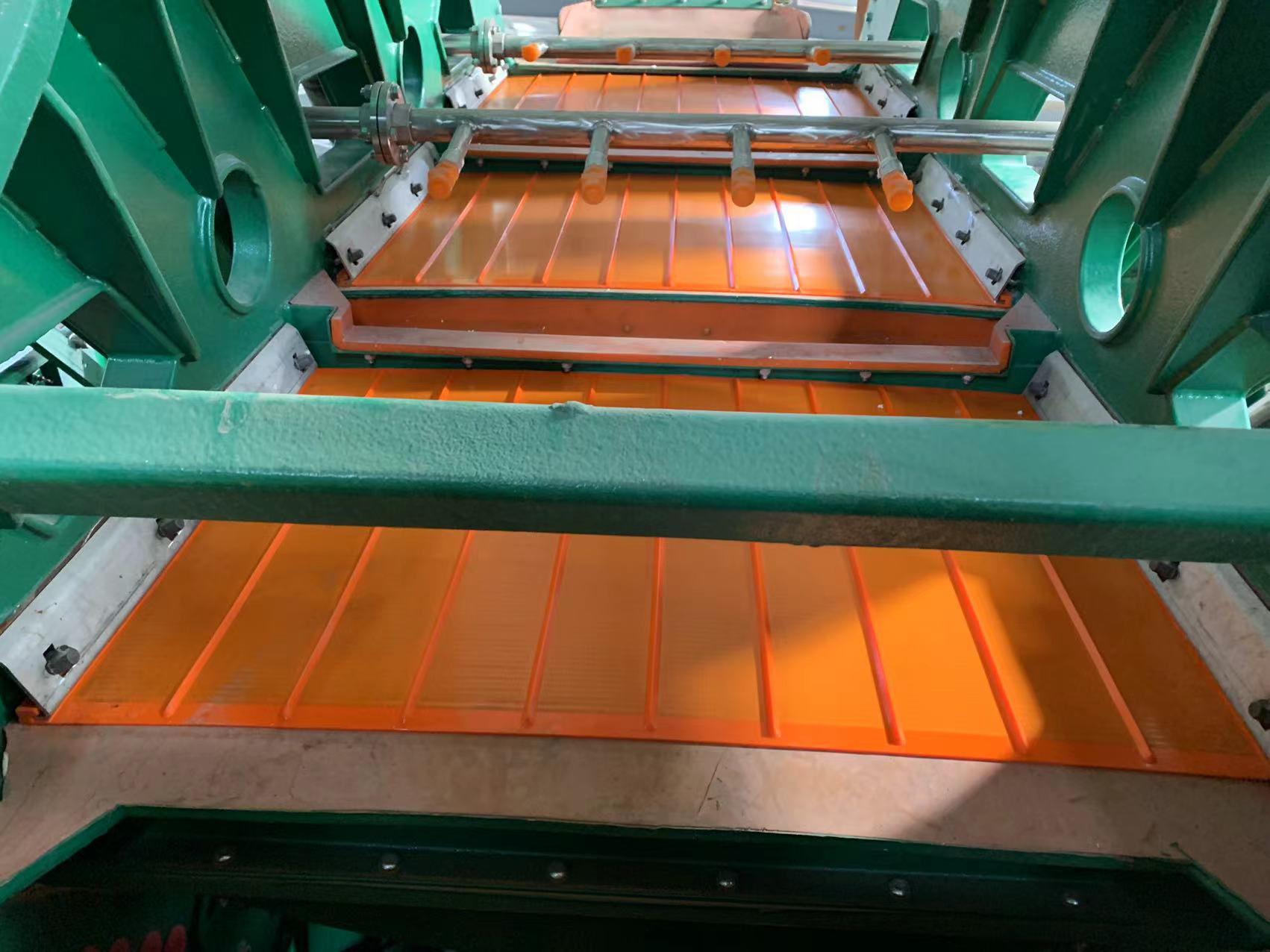 Polyurethane fine screen panels