Polyurethane fine screen panels
Review fine-aperture polyurethane screen panels for wet or dry mineral classification. Share the material, target cut size, panel dimensions, fixing and operating conditions so HUATAO can assess the right configuration.
← Fine screening media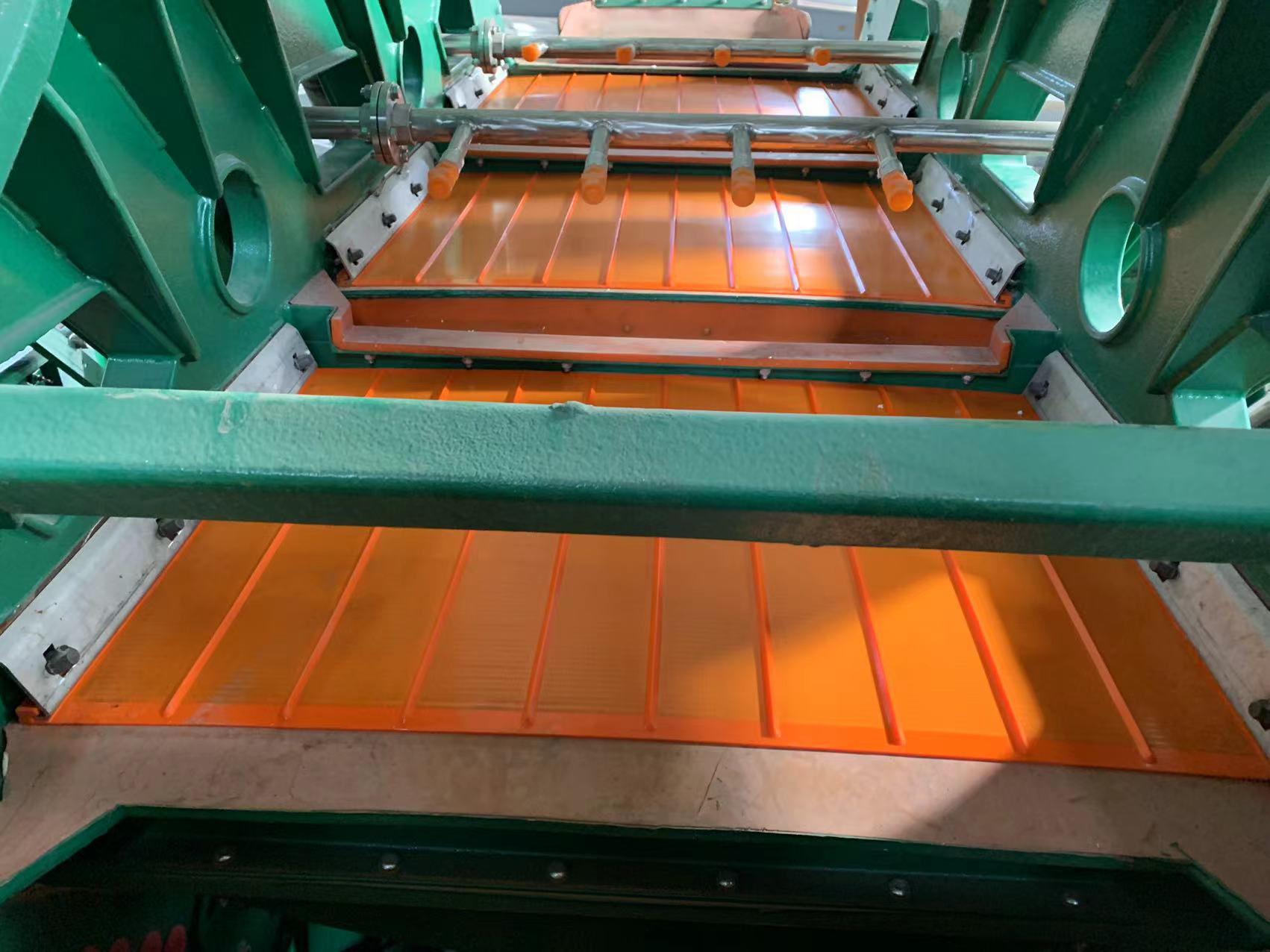
Specification notes
| Material | Polyurethane (existing public product-page statement) |
|---|---|
| Public aperture range | 0.045-10 mm; another current page section states 0.043-10 mm — engineering confirmation required |
| Public reference size | 700 x 1040 mm; confirm drawing orientation and tolerance |
| Fixing | Polyurethane or metal hook stated publicly; confirm by drawing |
| Selection status | Engineering review required before quotation |
What the buyer must confirm
Provide the complete existing part reference, panel length and width with orientation, aperture and shape, thickness, fixing details, machine make and model, mineral, wet or dry duty, quantity and an existing drawing or scaled photograph where available.
Compatibility boundary
A similar panel size does not establish mechanical or performance compatibility. HUATAO must review the interface, hook or fixing arrangement, curvature, sealing and duty conditions before proposing a replacement.
Sources
Applications
Screening media for silica-sand processingFrame a wet or dry silica-sand enquiry around cut size, feed condition, abrasion, recovery and panel interface.Fine screening in iron-ore beneficiationPrepare the operating and sample-test information needed for a fine-screen review.Screening media for industrial mineralsA qualification route for kaolin, glass sand and other industrial-mineral screening duties.
Screening problems
Wet classification answer pathConnect slurry, feed distribution, cut objective and installed equipment to the information required for a technical review.Screen life and wear reviewSeparate observable wear patterns, duty conditions and maintenance evidence from unsupported universal life claims.
Models & specifications
Quality & evidence
Technical services
Screen evaluation frameworkA Polydeck-inspired assessment structure for operating symptoms, installed media, deck condition and measurable review objectives—not a claimed HUATAO service result.Engineering and development reviewA Eurogomma-inspired space for confirmed engineering scope, design inputs, development boundaries and approved technical evidence.
Capabilities
OEM programmes
OEM replacement evaluationA structured route from existing part evidence to drawing review, sample validation and controlled quotation.OEM technical qualificationPrepare the evidence required for supplier, sample and batch approval without overstating current documentation.
Technical resources
Technical datasheets and drawing requestsRequest the current controlled document for the proposed product or model.Inspection and testing informationDefine what must be inspected and what evidence can be supplied before sample or production approval.Installation and sealing reviewCheck support, tension, fixing, sealing and panel orientation before installation.
Compare options
FAQ
Cases & validation
Company information
Selection guides
What information is needed for a screen-panel RFQ?Prepare the product, dimensions, aperture, fixing, duty and quantity before technical review.How to measure a replacement screen panelUse defined measurement directions and capture every fixing and sealing interface.Polyurethane or rubber screen panels: what should buyers compare?Compare the duty, impact, abrasion, opening, fixing and maintenance plan rather than relying on a universal material ranking.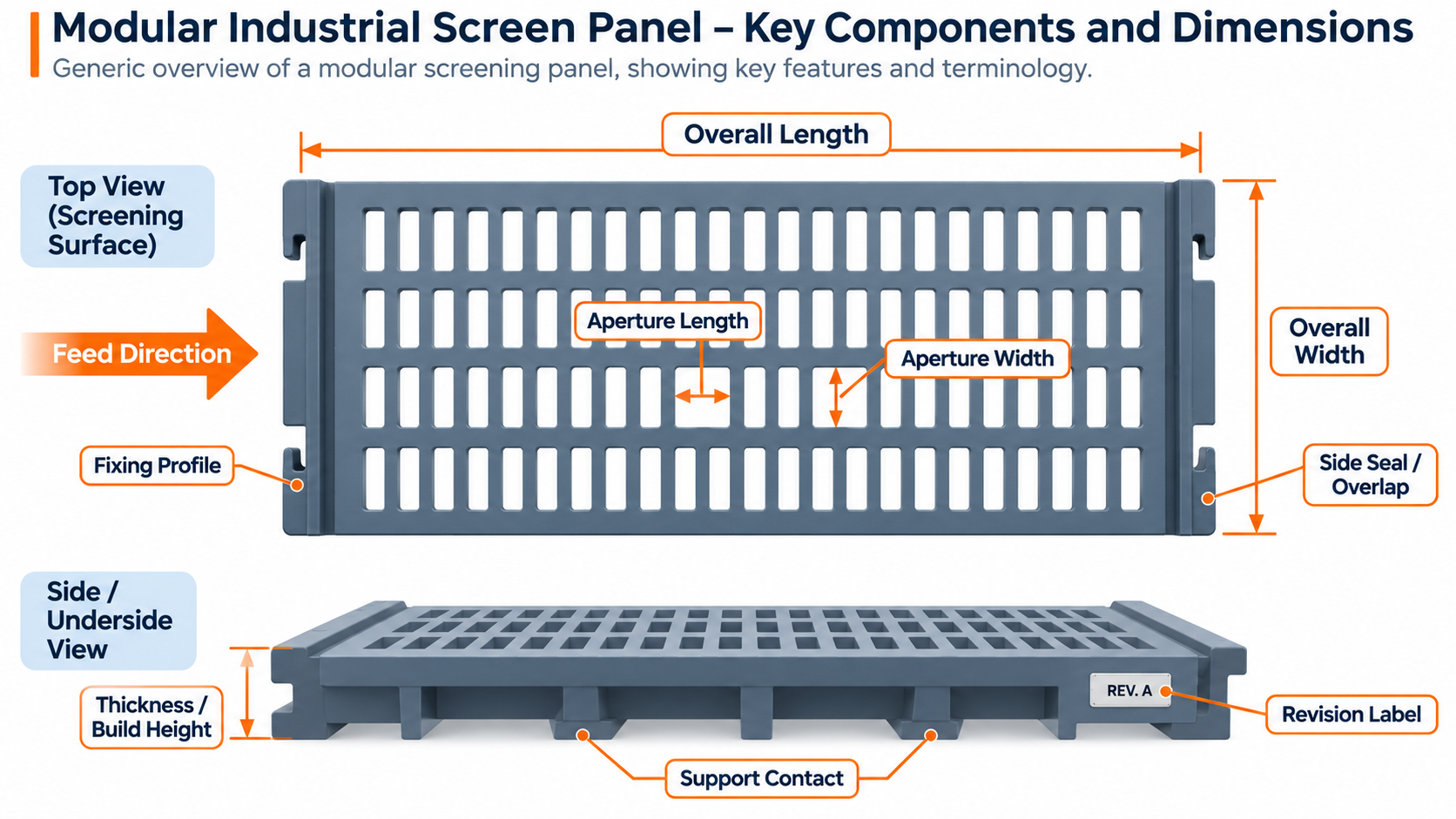 How to Qualify Replacement Screen Panels Beyond Model and SizeA safe replacement review compares the complete part identity, drawing revision, panel geometry, fixing and sealing interfaces, screen-deck condition, aperture requirements and operating duty. Matching overall length and width alone does not establish fit or process suitability.
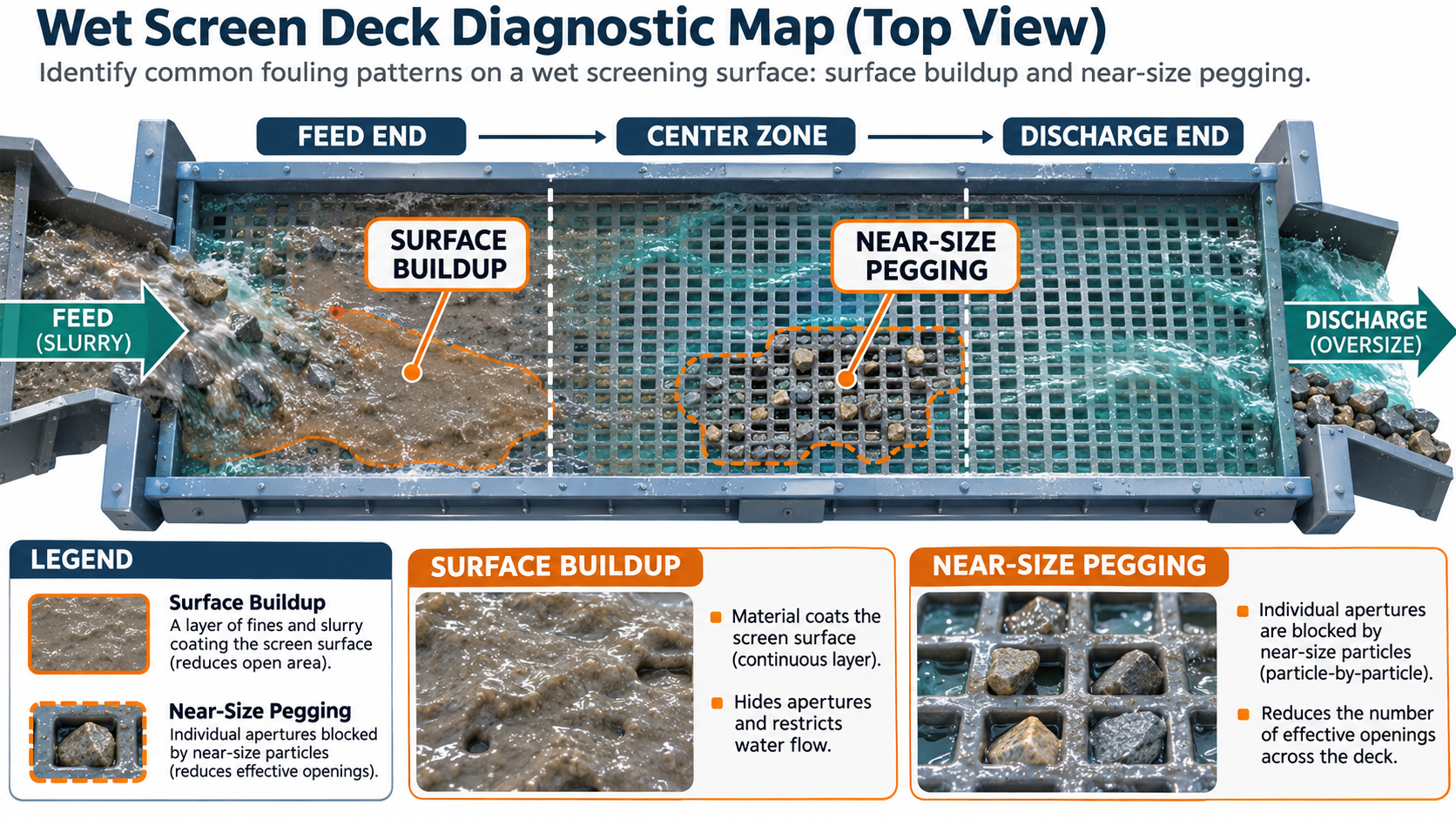 How to Diagnose Blinding on a Wet Screen Before Changing the MediaWet screen blinding is a symptom, not a product specification. Compare when and where blockage occurs with feed moisture, fines or clay, feed distribution, aperture geometry, media flexibility and deck condition before changing the screening media.
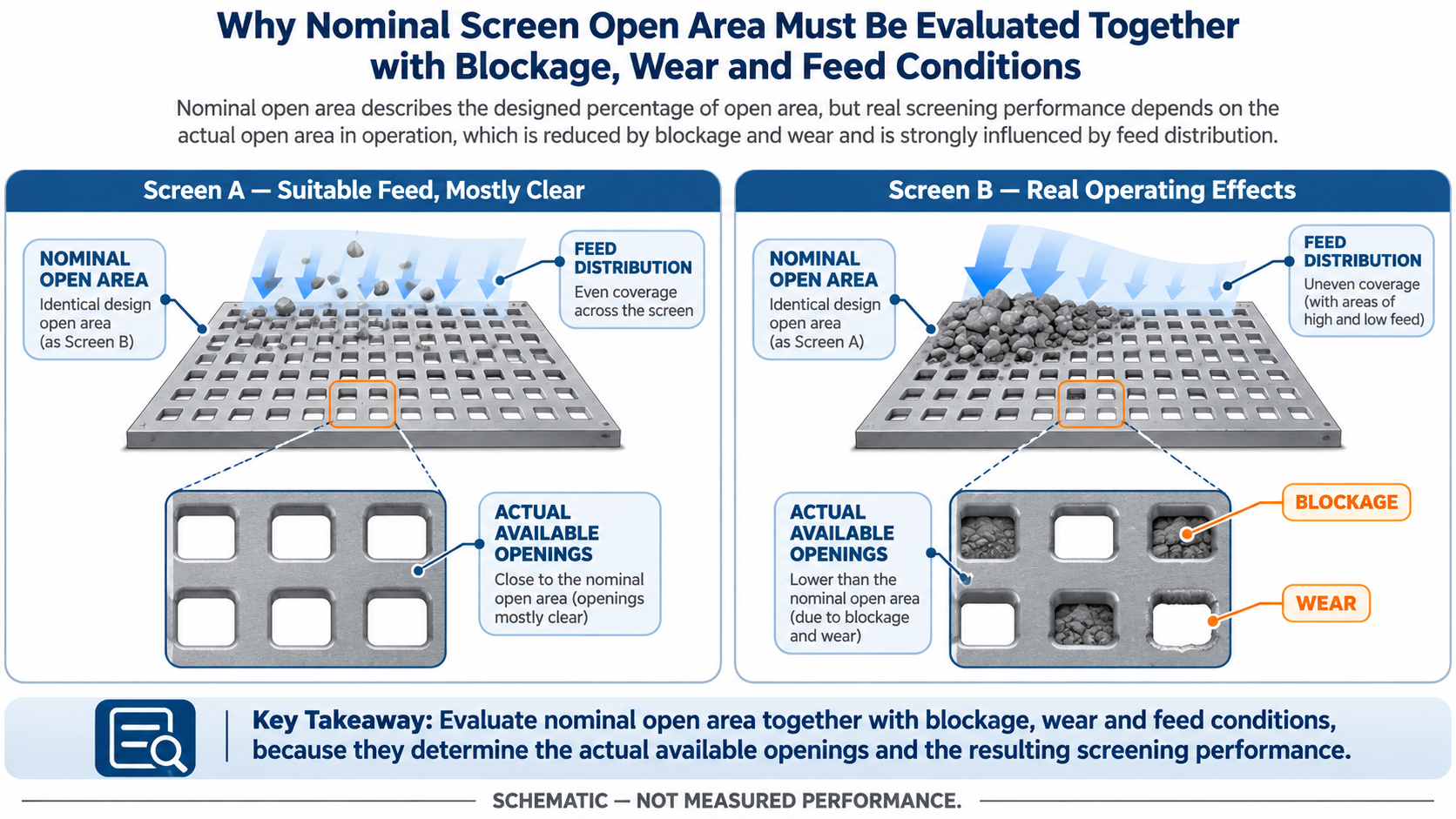 How Should Buyers Compare Screen Open Area and Wear Risk?Open area describes the portion of a panel available for openings, but it does not determine plant performance by itself. Buyers should compare it with aperture geometry, media thickness, blockage, support layout, feed conditions and wear observations.
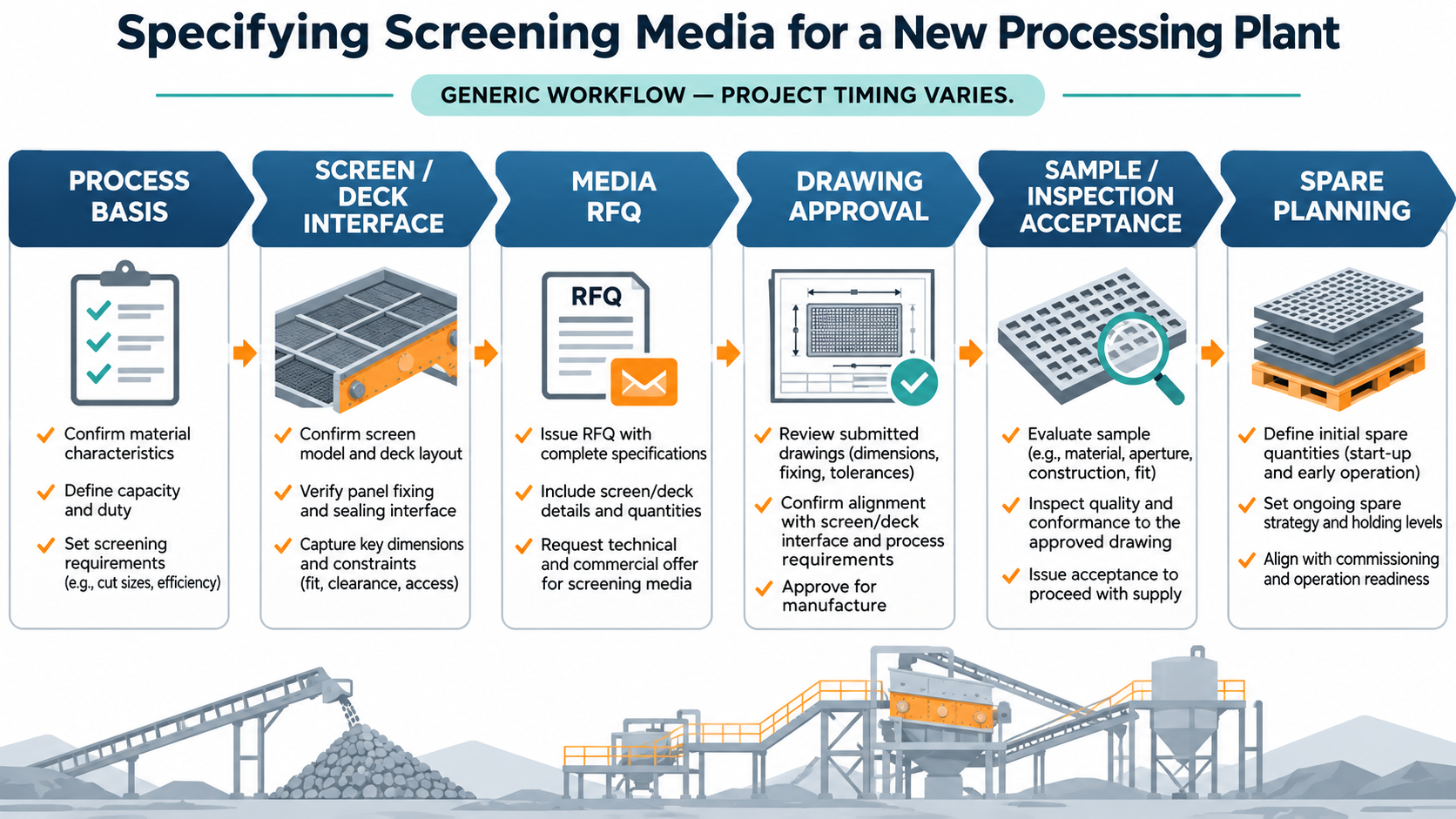 When Should a New Processing Plant Specify Its Screening Media?Project teams should define screening-media requirements while the process and equipment interfaces are being specified. Early coordination helps clarify aperture, fixing, materials, procurement responsibility, inspection and spare strategy before drawings and packages are frozen.
How to Qualify Replacement Screen Panels Beyond Model and SizeA safe replacement review compares the complete part identity, drawing revision, panel geometry, fixing and sealing interfaces, screen-deck condition, aperture requirements and operating duty. Matching overall length and width alone does not establish fit or process suitability.How to Diagnose Blinding on a Wet Screen Before Changing the MediaWet screen blinding is a symptom, not a product specification. Compare when and where blockage occurs with feed moisture, fines or clay, feed distribution, aperture geometry, media flexibility and deck condition before changing the screening media.How Should Buyers Compare Screen Open Area and Wear Risk?Open area describes the portion of a panel available for openings, but it does not determine plant performance by itself. Buyers should compare it with aperture geometry, media thickness, blockage, support layout, feed conditions and wear observations.When Should a New Processing Plant Specify Its Screening Media?Project teams should define screening-media requirements while the process and equipment interfaces are being specified. Early coordination helps clarify aperture, fixing, materials, procurement responsibility, inspection and spare strategy before drawings and packages are frozen.